Egypt as a Global Maritime Hub
Egypt stands at the center of a remarkable maritime transformation. Across its Mediterranean and Red Sea coastlines, ports are being redefined as world-class logistics and trade gateway connecting continents, expanding capacity, and positioning the nation as a global maritime hub for the 21st century.
From the ancient fleets that once sailed the Nile and Red Sea to today’s ultra-modern container terminals, Egypt’s maritime story is one of continuity and reinvention. What began as a civilization built on river trade has evolved into a logistics network connecting Asia, Africa, and Europe through some of the busiest shipping routes in the world.
A Maritime Legacy, Reinvented for Modern Trade
Egypt’s maritime legacy goes back more than four millennia. Ancient records describe organized expeditions to Sinai and Punt, ships laden with copper, incense, and gold, and thriving harbors on both seas. That spirit of connectivity remains alive today only now, it’s powered by digital systems, AI-driven cranes, and global partnerships.
At the heart of this renaissance lies the ambition to transform Egypt’s ports from transit points into integrated logistics ecosystems. Over the past decade, billions of dollars have been invested in port infrastructure, technology, and training turning the nation into a high-efficiency maritime hub capable of serving the world’s largest vessels.
The Suez Canal: Gateway of Global Trade
No story of Egypt’s maritime leadership can be told without the Suez Canal, opened in 1869 and still among the most vital arteries of world trade. Today, nearly 12% of global commerce including energy, food, and manufactured goods passes through its waters.
The Canal’s recent expansions have doubled capacity and reduced transit times, while the Suez Canal Economic Zone (SCZone) has emerged as a key industrial and logistics center for manufacturers and traders looking to access both European and Asian markets.
“The Suez Canal is not just a passage it’s a platform for growth,” said one senior official at the Suez Canal Authority. “It connects economies, creates jobs, and drives innovation.”
Ain Sokhna: Egypt’s Smart Port of the Future
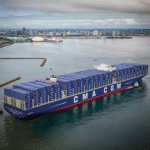
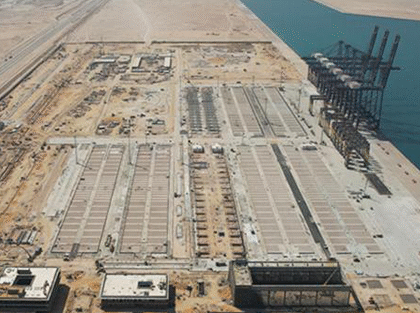
Among the flagship projects leading Egypt’s modernization is Ain Sokhna Port, situated on the Red Sea. Managed under a joint venture with global operators such as Hutchison Ports, COSCO Shipping, and CMA CGM, the terminal is being developed into the nation’s first fully smart and green port.
Towering ship-to-shore cranes from China’s ZPMC, semi-automated yard systems, and digital control centers define the port’s new identity. With a planned capacity of 3.5 million TEUs annually, Ain Sokhna is set to handle the world’s largest container ships while minimizing emissions through electric and AI-assisted operations.
“The arrival of each crane here represents a milestone in Egypt’s logistics evolution,” noted Transport Minister Kamel El-Wazir. “Ain Sokhna is becoming the beating heart of our Red-to-Med trade corridor.”
The Red-to-Med Corridor: Linking Continents
Egypt’s most ambitious transport initiative to date the Red-to-Med Corridor aims to create a seamless trade route connecting Ain Sokhna on the Red Sea to Alexandria and Dekheila on the Mediterranean through an electrified high-speed railway.
This multimodal corridor will enable cargo from Asia to cross Egypt in under 24 hours, significantly reducing time and cost for global shippers. More than a transport project, it represents a strategic shift toward integrated maritime logistics connecting seaports, dry ports, and inland industrial zones into one cohesive ecosystem.
“The Red-to-Med project will make Egypt the shortest, safest, and most efficient gateway between East and West,” said a Ministry of Transport representative. “It transforms our ports into partners, not competitors.”
Nationwide Port Modernization
While Ain Sokhna captures international headlines, Egypt’s modernization extends across the entire port network:
- Alexandria Port, handling about 60% of Egypt’s foreign trade, has undergone digitization and terminal expansion.
- Damietta Port has become the country’s first fully digital port, pioneering automation and smart logistics.
- Safaga and Nuweiba are being upgraded to handle commercial cargo and tourism.
- East Port Said and Dekheila have expanded berthing capacity and cargo handling efficiency.
Between 2014 and 2023, Egypt’s total berth length increased from 37 km to 67 km, port depths deepened to 18 meters, and port areas expanded from 40 km² to 75 km². By 2030, Egypt aims to handle 400 million tons of cargo and 40 million containers annually.
Global Collaboration: China, Technology, and Knowledge Transfer
Egypt’s collaboration with China has been pivotal in this transformation. Through the Belt and Road Initiative (BRI), Chinese partners have provided financing, engineering expertise, and world-class equipment that helped reshape Ain Sokhna and Port Said.
ZPMC’s advanced cranes, COSCO’s terminal management systems, and AI-driven logistics platforms are examples of how global technology is integrating with Egyptian operations. The result is a new generation of ports that are not only more efficient but also greener, safer, and digitally connected.
Egyptian engineers are being trained alongside international experts, ensuring a lasting transfer of skills and maritime knowledge.
Sustainability and Green Port Vision
Environmental sustainability is a cornerstone of Egypt’s maritime vision. The government’s green port initiative emphasizes electric-powered cranes, renewable energy, and wastewater recycling systems, aligning with global decarbonization goals and Egypt’s COP27 climate commitments.
At Ain Sokhna and Alexandria, energy-efficient lighting, AI-controlled crane systems, and hybrid-powered tugs are setting new standards for eco-friendly port management. These innovations are not only good for the planet they reduce long-term operating costs and attract environmentally conscious investors and shipping lines.
Economic and Regional Impact
Modern ports create more than just efficient trade they create jobs, industries, and entire economic ecosystems. The expansion of Ain Sokhna alone is expected to generate tens of thousands of new jobs in construction, warehousing, logistics, and support services.
The SCZone has already attracted global companies from China, the UAE, and Europe, establishing manufacturing and re-export hubs near port facilities. These investments strengthen Egypt’s role as an industrial and maritime gateway to Africa.
“Every investment in our ports adds a multiplier effect across the economy,” said Walid Gamal El-Din, Chairman of the SCZone. “It’s about transforming Egypt into a global center for logistics, manufacturing, and trade.”
The Role of Shipping Agencies and Marine Logistics
Behind every modern port stands a network of shipping agencies, marine service providers, and logistics partners ensuring that global trade flows smoothly. From coordinating port calls to managing documentation, supplies, and crew changes these companies are the operational backbone of maritime commerce.
As Egypt’s ports expand and modernize, reliable and experienced shipping agencies play a vital role in connecting ship operators with port authorities, terminals, and logistics facilities.
Ocean Ship: Trusted Partner in Egypt’s Maritime Growth
With deep-rooted experience in port operations, vessel agency services, and marine logistics, Ocean Ship has become one of the most dependable names in Egypt’s maritime sector.
Operating across key Egyptian ports including Alexandria, Port Said, Suez, and Sokhna, Ocean Ship provides end-to-end vessel support, including clearance, documentation, cargo coordination, bunkering assistance, and husbandry services.
As Egypt cements its status as a global maritime hub, Ocean Ship continues to support international shipowners, charterers, and traders ensuring efficient port calls, smooth turnaround, and high-quality service at every stage of maritime operations.
For vessels navigating Egypt’s waters, Ocean Ship represents not just a service provider but a strategic partner in reliability, coordination, and maritime excellence.